

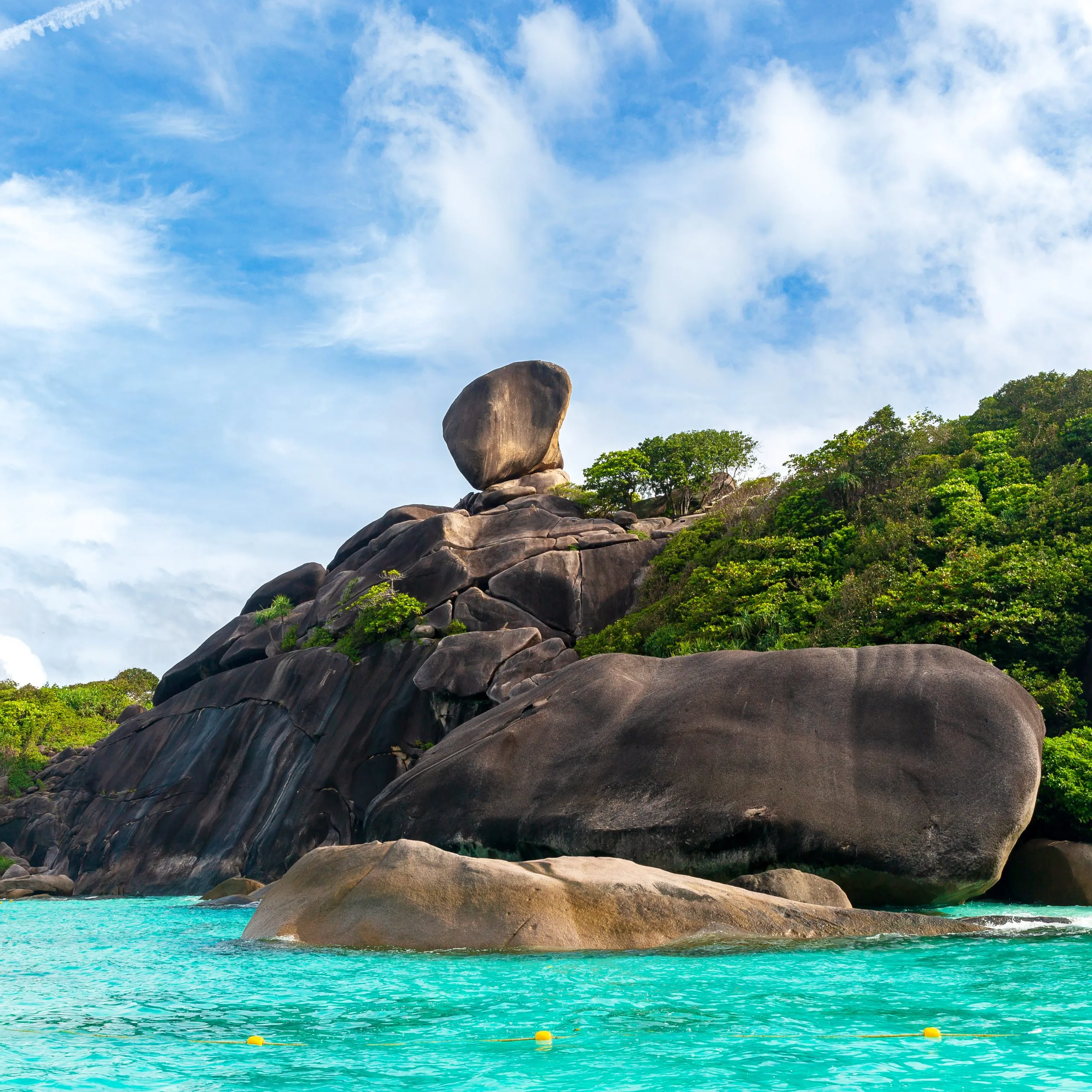

The Similan Islands are one of the Andaman Sea’s great snorkelling and diving destinations — but unlike most of Thailand, you can’t visit year-round. The Mu Ko Similan National Park closes for the monsoon, so timing your trip matters more here than almost anywhere else on the coast. Here’s how the season works and when to come.
The park is only open about half the year
Mu Ko Similan National Park is officially open from roughly 15 October to 15 May, and closed for the rest of the year (mid-May to mid-October) during the southwest monsoon. Exact opening and closing dates are set by the park authority each season and can shift by a week or two, so it’s always worth confirming before you lock in dates. Outside those months there are no day trips — the sea is too rough and the park simply doesn’t run.
The best months: November to April
Within the open season, the sweet spot is November through April, when the Andaman is calm and the water is at its clearest. February, March and early April usually bring the best underwater visibility of the year — often 20–30 metres — which is why this window is peak season for both day-trippers and liveaboards. Early in the season (late October, November) the islands are quieter and prices softer, with visibility still very good.
Day trip or liveaboard?
A day trip is the simplest way to see the Similans — a speedboat from the mainland, two or three snorkel stops, lunch on one of the islands, and back the same evening. It’s ideal if you’re based in Khao Lak and want the highlights without committing to multiple days at sea. A liveaboard suits certified divers who want the remote northern dive sites and multiple days underwater. For most visitors staying on the coast, the day trip is the right call.
Khao Lak is the natural base — it’s the closest mainland town to the departure pier, so you get the shortest boat crossing and the earliest start. If you’re planning a trip, see our Similan Islands snorkelling day trip, and if the Similans are closed for the season, the Surin Islands run on a similar calendar and are the obvious alternative.


0 Comment