Impress / Disclaimer © 2007 by 2x4-Media  
 
Disable Flash Slideshow
You are here: Tours & Transfers > Kho Similan


>> Bookings
>> Picture Gallery
>> Webcam
>> Google Maps
>> Guestbook
>> Sitemap
Phuket:
Click for Phuket, Thailand Forecast
 
Surat Thani:
Click for Surat Thani, Thailand Forecast
    Koh Similan

Just 70 km west of the Khao Lak beaches lays a gateway to another world. Koh Similan is one of the best-known island groups in the Andaman Sea, largely because of the wonders that are waiting beneath the clear blue waters that surround it. Rated among the 10 most interesting dive areas in the world, this little archipelago has become a favourite destination for snorklers and divers alike.

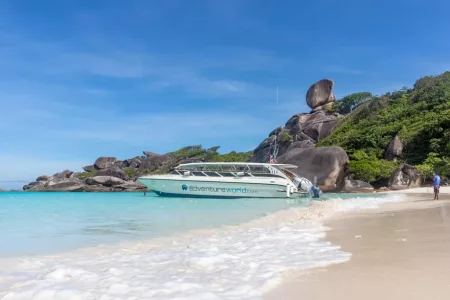
Sail Rock
Sail Rock in Donald Duck Bay

"Similan" is derived from the Malay "sembilan", and means "nine", the word Koh is a Thai expression and means nothing else than Island. "Koh Similan" translates to "Nine Islands". Each of the Similan Islands has a number as well as a name. These are, running from north to south:
Ba Ngu (No. 9),
Similan (No.8),
Hin Lunk Chang (No.7),
Payu (No. 6),
Haa (No. 5),
Miang (No. 4),
Payan (No. 3),
Payang (No. 2),
and Hu Yong (No. 1).


Topography
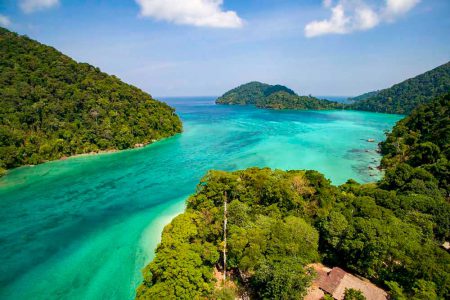
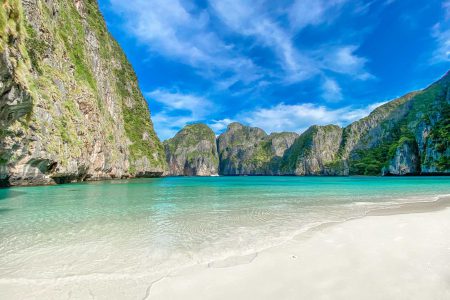
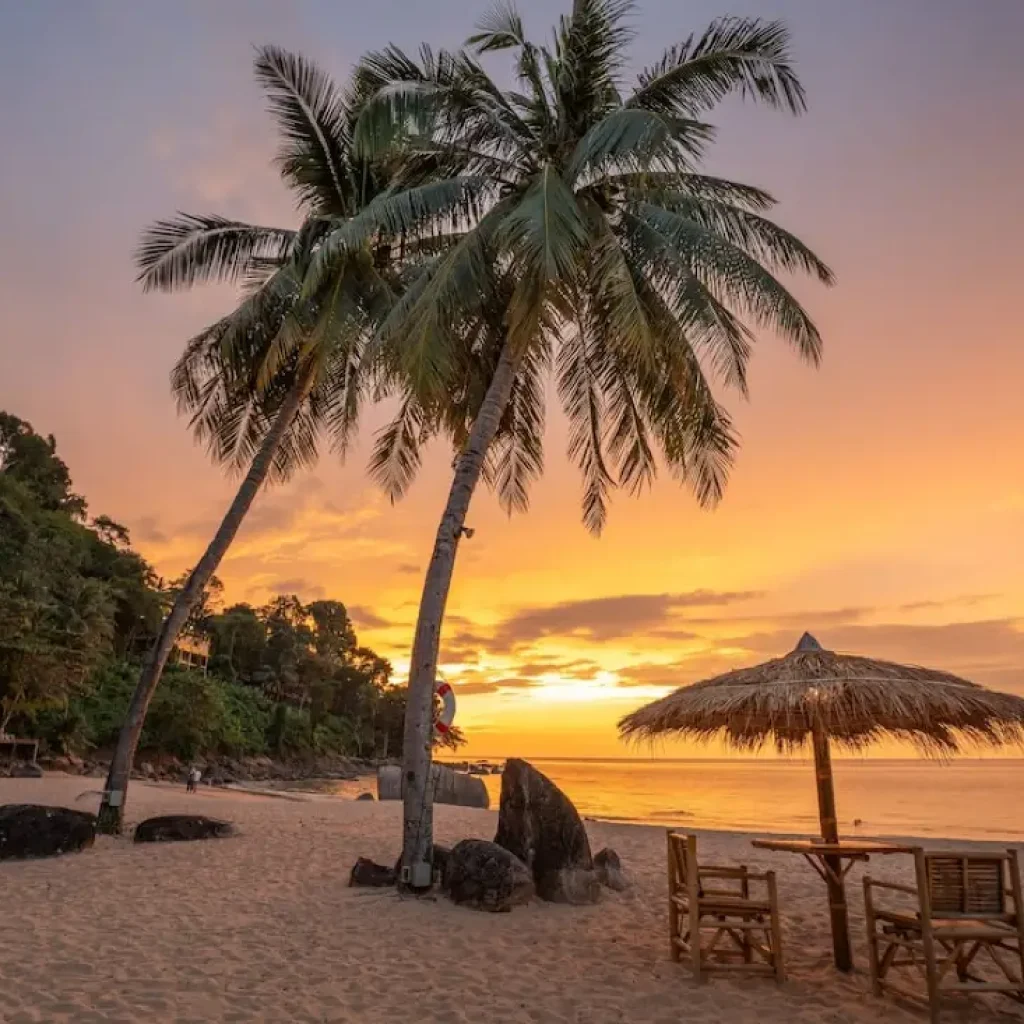
The shoreline of each island describe inconsistent curves since the islands are situated in the outer part of the sea and are worn away directly by waves. The bigger islands feature some hills and granite cliffs, with the highest peak of 244 meters above sea level. At first glance the most striking features of these islands are the huge boulders that litter the western and southern shores of several of the islands. Another highlight, as the visitor soon discovers, are the white coral-sand beaches, splendidly picturesque and often deserted.

A variety of forces have given shape to these islands. To begin with, the Similans were intrusions, up welling of hot magma that found its way through weak spots in the Earth's crust 150 million years ago. Incredibly powerful forces in the earth's outer layer cracked the granite rock layer into blocks, moved them up and exposed them to millennia's of wind and water erosion.
Today, piles of stones, some of them as big as houses, lie as though collected and later abandoned in careless heaps by some ancient race of beachcombing giants. You will find these boulders on shore as well as under water, where submarine peaks, canyons, caves and passageways provide scuba divers with some of the most interesting submarine prospects in the world.

Dolphins
Fellow travellers on the way to Similan

Underwater Wonders
Underwater all sorts of marine creatures have helped establish the reefs and the sandy beaches. This beach is in large part a product of diligent scraping and nibbling away by organisms such as the parrotfish - an average individual of which species may excrete more than 16 kilos of sand in the course of a year's lunching on hard corals. The conditions for coral growth are ideal, with an average sea temperature of about 28 C° and exceptionally clear waters. More than 200 species of hard coral alone have so far been identified in this area, while these islands offer home to the greatest schools of reef fish in Thai waters. In fact, in terms of both marine life and bottom topography, there's more variety than you'll find in most other dive and snorkel destinations around the world. The Similans offers almost everything - coral walls, big rocks, huge sea fans and barrel sponges, caves, swim-throughs as well as plenty of shallow water for snorkelling (you'll find coral gardens in as little as six to seven metres depth).

Life above the water
The Similan islands have never been permanently inhabited (as far as we know today), so large areas of the jungle we find on the islands are still primary forest.
These types of forests can be divided into 3 main characteristics:

  • Beach forest - open forest with scattered plants at approximate height of not over 15 meters.
  • Scrub forest - habitat for scrubs which can only develop on grounds with soil depth not exceeding 30 centimetres.
  • Primary forest - habitation for perennials at a height of 20 meters or above.
Koh Miang
View Point on Koh Miang

Ironwood and gum trees are among the larger trees, while jackfruit, rattan and bamboo form part of the denser undergrowth. The islands are home to crab-eating monkeys, dusky langurs, squirrels, bats, lizards and a good variety of birds (though the monkeys are shy and rarely seen by the casual observer).
A survey conducted in 1992 revealed that 39 species of birds can be found on the nine islands. Resident species include the Brahminy kite and the white-breasted waterhen, while migratory species include the pintail snipe, and grey wagtail. Temporary migratory species include the barn swallow, cattle egret, watercock, and the roseate tern. The most commonly seen species include the pacific reef-egret, nicobar pigeon, pied imperial pigeon, white-bellied sea-eagle, and the collared kingfisher.
The environment of Mu Koh Similian National Park is obviously that of a small island. Wherever you go, you are never far from the sea. Natural fresh water reserves are few and as a result, large mammal species cannot exist. Surveys have revealed that 27 species of small mammals exist within the park, including 16 species of bats, 3 species of squirrels and 4 species of rats. Finally, the more unusual but fairly common residents include the bush tailed porcupine, common palm civet, flying lemur and the bottle nosed dolphin. 22 species of reptiles and amphibians can be found in the park including the banded krait, reticulated python, white-lipped pit viper, garden blue lizard, hawksbill turtle, leather turtle, bengal monitor lizard, ornate froglet, marsh frog, and the common bush frog. Finally, another most interesting species located in the Similan islands is called the hairy leg mountain land crab, the world's biggest land crab.