

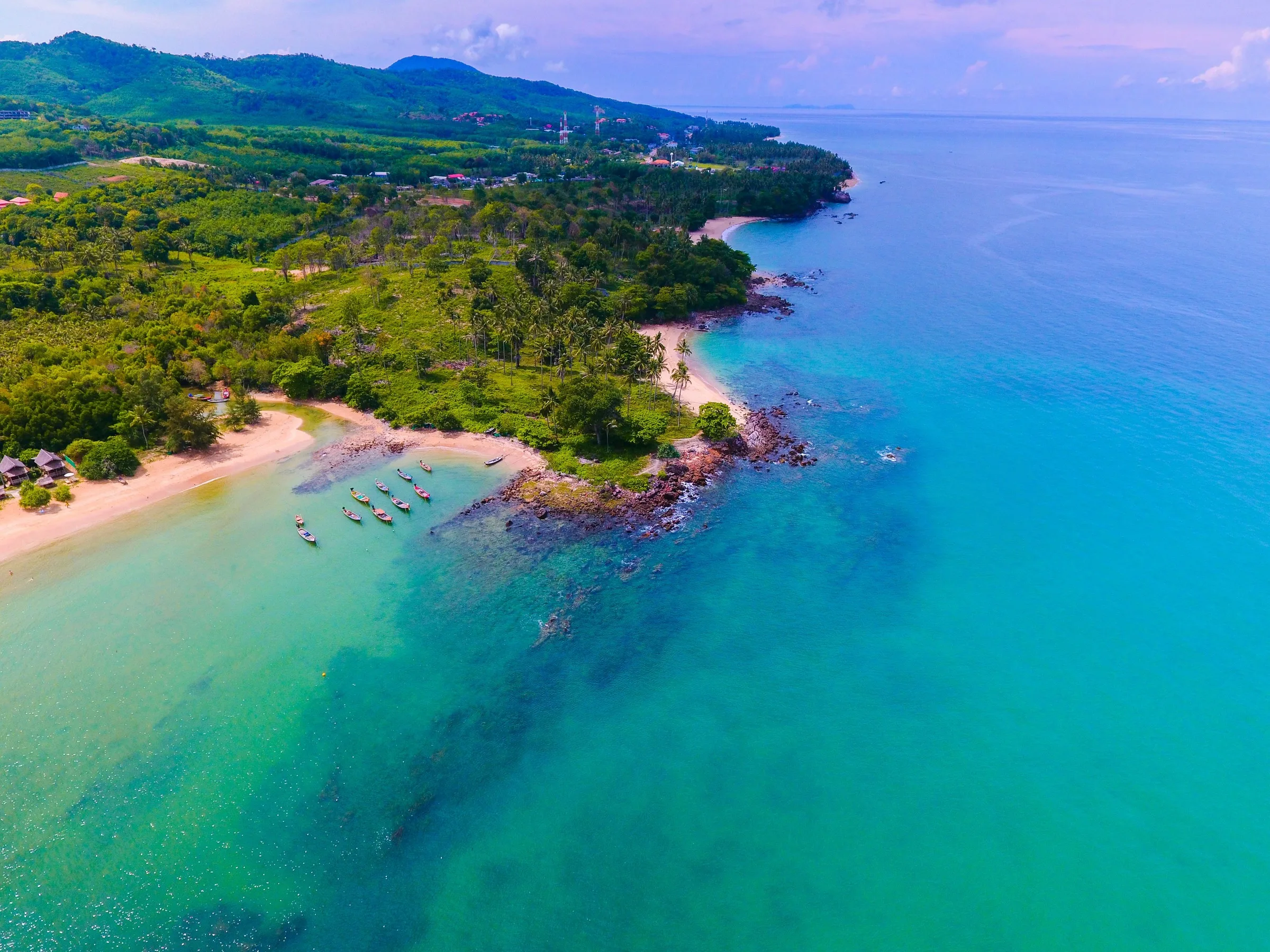

Aktivitäten auf Koh Lanta: 8 beste Erlebnisse (Reiseführer 2026)
Koh Lanta Yai ist eine lange, bewaldete Insel in der Provinz Krabi, die vom Festland aus über zwei kurze Autofähren erreichbar ist. Die Westküste hat die schönsten Strände, die Ostseite liegt an einer von Mangroven gesäumten Flussmündung. Old Lanta Town an der Südostspitze bewahrt eine Reihe malaiisch-chinesischer Holz-Shophouses, eines der stimmungsvollsten Altstadtviertel an der Andamanenküste. Hier sind 8 Dinge, die Ihre Zeit auf Koh Lanta wert sind.
1. Long Beach (Hat Phra Ae)
Der bekannteste Strand von Koh Lanta erstreckt sich über 4 km entlang der Nordwestküste – der breiteste Sandabschnitt der Insel, mit klarem Wasser und gleichmäßigem Wellengang in der Hauptsaison von Oktober bis April. Die Sonnenuntergänge hier liegen direkt im Westen über dem Andamanensee. An der Strandstraße reihen sich Gästehäuser, Open-Air-Restaurants und Tauchshops.
2. Mu Koh Lanta Nationalpark (Südspitze)
Der Nationalpark bedeckt das südliche Drittel der Insel. Im Hauptbereich gibt es einen Leuchtturm, Aussichtspunkte über die schmale Meerenge zwischen Koh Lanta und Koh Rok, Korallenriffe, die Schnorchler direkt vom Strand aus erreichen, sowie bewaldete Hügel mit Nashornvögeln und Waranen. Es wird ein Eintritt erhoben. Die Zufahrtsstraße zum Park ist eine landschaftlich reizvolle Fahrt vom Hauptstrandbereich aus.
3. Tagesausflug zum Schnorcheln nach Koh Rok
Koh Rok Noi und Koh Rok Yai sind zwei benachbarte Inseln 47 km südlich von Koh Lanta – Teil des Nationalparks, nur mit Longtail- oder Speedboot erreichbar. Die Korallengärten zwischen den beiden Inseln zählen zu den gesündesten an der Andamanenküste. Reiseveranstalter auf Lanta bieten ganztägige Touren an; die Sichtweite liegt in der Trockenzeit bei 10–20 m.
4. Tauchen bei Hin Daeng und Hin Muang
Die beiden besten Tauchplätze der Region – unter Wasser liegende Felsspitzen 45 km südlich von Koh Lanta. Hin Daeng („Roter Fels“) ist bekannt für Leopardenhaie, Adlerrochen und gelegentliche Walhai-Sichtungen; Hin Muang („Violetter Fels“) hat einen der tiefsten Abhänge der Andamanenküste. Tagestouren setzen einen PADI-OW-Schein oder vergleichbar voraus; die Sicht liegt beständig bei 20–30 m.
5. Old Lanta Town
Das ursprüngliche Dorf an der Südostküste – ein halbmondförmiger Bogen aus Holz-Shophouses auf Stelzen über dem Wasser aus dem 19. Jahrhundert, errichtet von malaiisch-chinesischen Händlern. Heute konzentrieren sich hier kleine Gästehäuser, Cafés und Kunsthandwerksläden. Vom Pier blickt man hinüber zu den Mangroven auf dem Festland. Eher ein gemütlicher Nachmittagsspaziergang als ein Halbtagesausflug.
6. Seekajak durch die Mangroventunnel
Die Ostküste von Koh Lanta, dem Festland zugewandt, besteht aus dichtem Mangrovenwald. Geführte Kajaktouren führen durch Gezeitenkanäle und Höhlensysteme – am eindrucksvollsten ist die Höhle Tham Khao Maikaew, die bei Flut mit dem Kajak erreichbar ist. Halbtagestouren starten im Hauptstrandbereich (etwa ฿500–฿800 pro Person).
7. Sonnenuntergang in der Kantiang Bay
Die Kantiang Bay an der Südwestküste ist eine tiefe, geschützte Bucht – ruhiger als Long Beach, mit klarem Wasser und weniger Bebauung. Von der Klippe über dem südlichen Ende der Bucht hat man einen 180-Grad-Blick auf den Sonnenuntergang über dem Andamanensee. Ein schöner Abschluss für eine Fahrt entlang der Westküstenstraße.
8. Lanta Elephant Sanctuary
Ein ethisches Schutzprojekt für Kleingruppen am Nordende der Insel – gerettete Elefanten in natürlicher Waldumgebung, keine Vorführungen und kein Reiten. Vormittagsbesuche umfassen Füttern und Baden im Fluss. Vorherige Buchung erforderlich; die Gruppen bleiben sehr klein. Eines der durchdachter geführten Schutzprojekte an diesem Küstenabschnitt.
Anreise nach Koh Lanta mit Khao Lak Land Discovery
Sie reisen von Khao Lak an? Wir bieten private Khao-Lak-Transfers von Tür zu Tür nach Koh Lanta – inklusive Autofähre – zu Festpreisen und mit englischsprachigen Fahrern.
Mehr über Long Beach (Hat Phra Ae)
Long Beach – auf den Karten Hat Phra Ae – ist der Strand, den die meisten Besucher vor Augen haben, wenn sie an Koh Lanta denken, und er verdient mehr als eine beiläufige Erwähnung. Der 4 km lange Sandstreifen an der Nordwestküste ist der breiteste der Insel und der bequemste als Standort: Die parallel verlaufende Strandstraße trägt die dichteste Ansammlung von Gästehäusern, Open-Air-Restaurants, Tauchshops und Mietrollern auf Koh Lanta, ohne in die lückenlose Bebauung eines Strandabschnitts von Phuket oder Krabi zu kippen. Der Sand fällt sanft ab, sodass das Baden für Familien während der Trockenzeit von Oktober bis April sicher ist, und die Westausrichtung bedeutet, dass jeder Abend mit einem ungestörten Andaman-Sonnenuntergang direkt vom Strand aus endet. Weil er so lang ist, bleibt das nördliche Ende bei Klong Dao belebter und besser zu Fuß erschließbar, während die südlichen Abschnitte zu ruhigen Streifen ausdünnen, die man fast für sich allein hat. Wenn Sie einen Standort suchen, der Essen, Nachtleben, Tauchabholung und Sonnenuntergang in Gehweite bringt, ist Long Beach genau das.
Häufig gestellte Fragen
Wie komme ich von Khao Lak nach Koh Lanta?
Koh Lanta erreicht man von Khao Lak auf dem Landweg mit zwei kurzen Autofähren gegen Ende der Fahrt – rund 4 bis 4,5 Stunden von Tür zu Tür. Am einfachsten ist ein privater Transfer, der Sie über beide Fähren begleitet. Wir bieten private Transfers von Khao Lak nach Koh Lanta inklusive der Autofähren, zum Festpreis und mit englischsprachigem Fahrer – kein Fahrzeugwechsel am Hafen.
Wie viele Tage braucht man für Koh Lanta?
Drei bis vier Nächte sind ideal. Das gibt Ihnen einen Strandaufenthalt an der Westküste, einen Bootsausflug nach Koh Rok oder zu den Tauchplätzen Hin Daeng, eine Fahrt zum Nationalpark an der Südspitze und einen Nachmittag in Old Lanta Town. Koh Lanta belohnt eine gemächliche Reise – es ist eine lange, ruhige Insel und keine Checkliste von Sehenswürdigkeiten.
Welcher ist der schönste Strand auf Koh Lanta?
Long Beach (Hat Phra Ae) ist der beliebteste – der breiteste Sand, der beste Sonnenuntergang, die meisten Restaurants und Tauchshops in Gehweite. Für etwas Ruhigeres ist die Kantiang Bay an der Südwestküste eine geschützte Bucht mit klarem Wasser und weniger Bebauung, und die Strände im Mu-Koh-Lanta-Nationalpark an der Südspitze sind die ursprünglichsten. Die Westküstenstrände sind von Oktober bis April am besten; in der grünen Saison von Mai bis Oktober wird die See rau.


0 Kommentare